
Te Ara Hihiko Rangatahi Panel Report
The Unfiltered Truth: Building Courage, Dismantling Barriers, and Unlocking the Potential of Aotearoa’s Rangatahi.
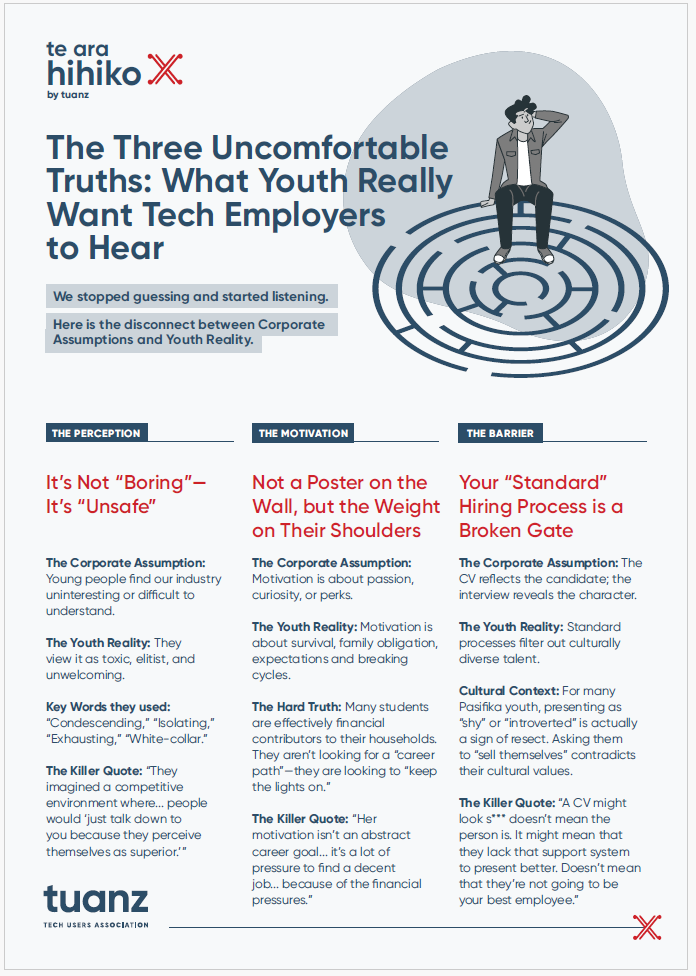
Click on the picture to download the one page summary.
A report created by the Te Ara Hihiko programme of the Technology Users Association of NZ. November 2025.
Click here if you would like to read the full report.
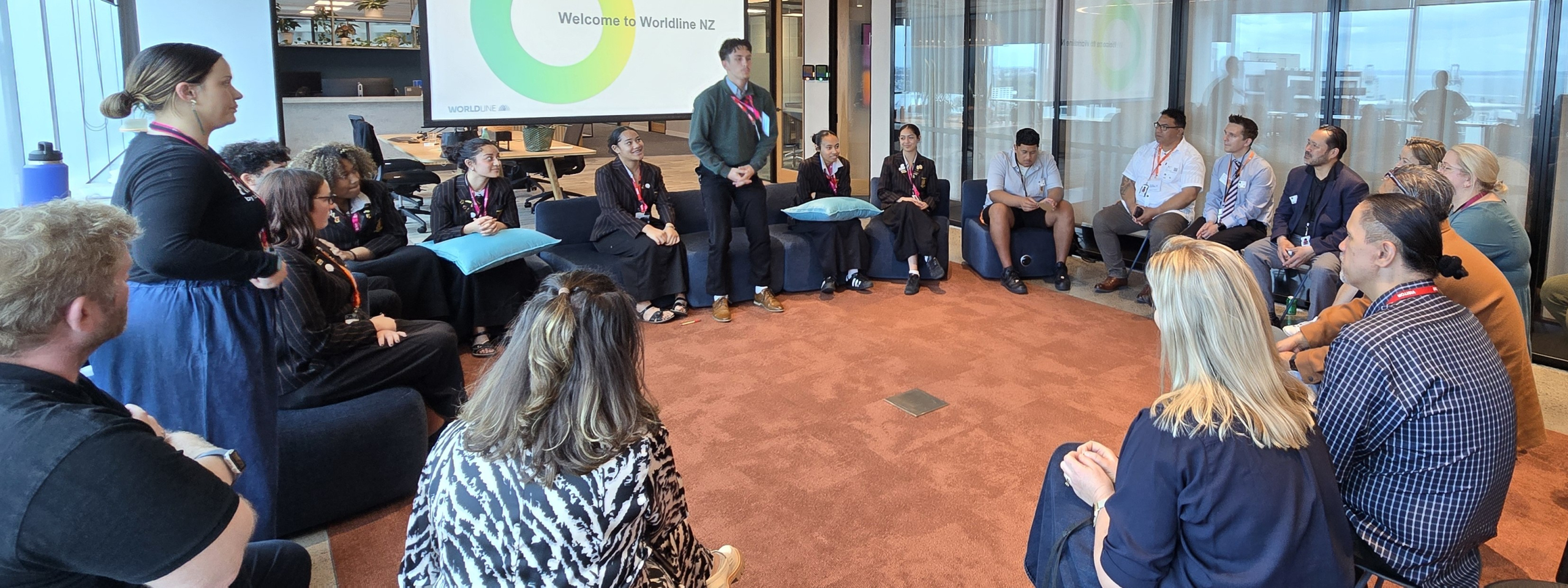
Arising out of our last hui with the Te Ara Hihiko roopu in 2025, we established a rangatahi panel within Pukekohe High School to better understand the challenges and perceptions preventing Māori and Pasifika from entering—and remaining within—a digital career in our businesses. We knew it was essential not to assume, a common adult mistake, but instead to go straight to the source.
Across numerous evening hui, we asked our nine rangatahi the hard questions: What do you think and feel about the tech and digital sector in Aotearoa? What would support you to consider pathways into our industry? What is holding you back, and what do you fear most?
Every session, they showed up wholeheartedly and offered honest, often confronting, insights and in return they were taken through a development journey grounded in “getting comfortable with being uncomfortable”—because that’s where growth occurs. We watched them expand their understanding of their world, their talent, their potential, and their future. In return, they offered an unfiltered rangatahi lens of truth.
It’s Not Just “Boring”—It’s “Scary and Unwelcoming”
When asked about their initial perception of the tech and digital sector, the students didn’t use words like “uninteresting” or “difficult.” Their descriptions were visceral and deeply negative. They called the industry “scary,” “misleading,” “unwelcoming,” “condescending,” “isolating,” and “exhausting.”
This wasn’t just a fear of the unknown; it was a specific vision of an unwelcoming culture. They imagined a competitive environment where, if you weren’t on the same level as everyone else, people would “just talk down to you because [they] perceive themselves as superior.” Many also believed it was a “male dominant field” and a “white collar job” where they felt they “wouldn’t be wanted.” While companies worry that young people might find their work “boring,” the reality is that many are too afraid to even consider it.
Those of us leading the panel conversations were stunned by the intensity of this feedback and this insight is a crucial starting point. Before we can showcase opportunities, we must first dismantle the fear. For companies serious about building an inclusive talent pipeline, the first task is to understand and address the deep-seated mistrust that keeps young people from even looking at the front door.
Their Motivation Isn’t a Poster on the Wall; It’s the Weight on Their Shoulders
When we talk about motivation, we often think of passion, ambition, or the desire for a challenge. And while some students mentioned familiar drivers like curiosity and being competitive, the more powerful motivators were rooted in heavy personal and family pressures.
Their drive comes from the expectation to live up to the achievements of older siblings and the intense desire to make their family’s sacrifices worthwhile. For one student, it’s a mission “to also kind of break out of that stereotype for moldy… to show them that Molly can be anything.” Most surprisingly, the panel revealed that some students “are or will be financial contributors to their home.”
One student’s story cuts through the corporate noise. As the oldest child in a single-parent household, her motivation isn’t an abstract career goal, but an immediate and crushing responsibility. In her own words: “it’s a lot of pressure that I have to find a decent job somewhere and maybe not go to university because of the financial pressures.”
Employers are not just hiring a young person; they are welcoming an individual navigating a complex web of internal ambition and external obligation. When they walk into a new job, they carry pressures that impact their focus, their finances, and their well-being. A standard corporate induction process—a “module online tick box”—is profoundly inadequate for a new hire who is waiting for their first paycheck to help keep the lights on at home.
Our “Standard” Hiring Process Is a Broken Gate
The findings also deliver a sharp critique of traditional recruitment, revealing it to be a significant barrier for culturally diverse youth. The core message was clear: a CV should never be the sole judge of a candidate, because a poorly written resume is more likely to reflect a lack of a support system than a lack of potential.
The discussion highlighted how standard processes are often biased, with candidates being judged—and dismissed—based on their name or gaps in their employment history. And while a CV may not be up to our perceived standard, the students were adamant that it might just mean that they lack that support system to make something look marketable and flashy. “Doesn’t mean that they’re not going to be your best employee in 12 months time.”
Furthermore, typical interview formats fail to account for crucial cultural nuances. For example, Pasifika youth may come across as “shy” or “disengaged” when, in fact, they are demonstrating respect. It is not culturally ingrained for many Māori and Pasifika youth to “sell themselves,” which makes a standard question like, “Why should I pick you?” ineffective and culturally biased.
This isn’t just a cultural lesson; these practices can actively sabotage our stated diversity goals, “especially if some of our… priorities are to lift Māori and Pacific numbers within our organizations.” The advice for employers is direct: look beyond the paperwork. Adapt our interview and onboarding processes to be culturally safe and responsive, or we will continue to screen out the very talent we are looking for.
Conclusion: From Feedback to Foresight
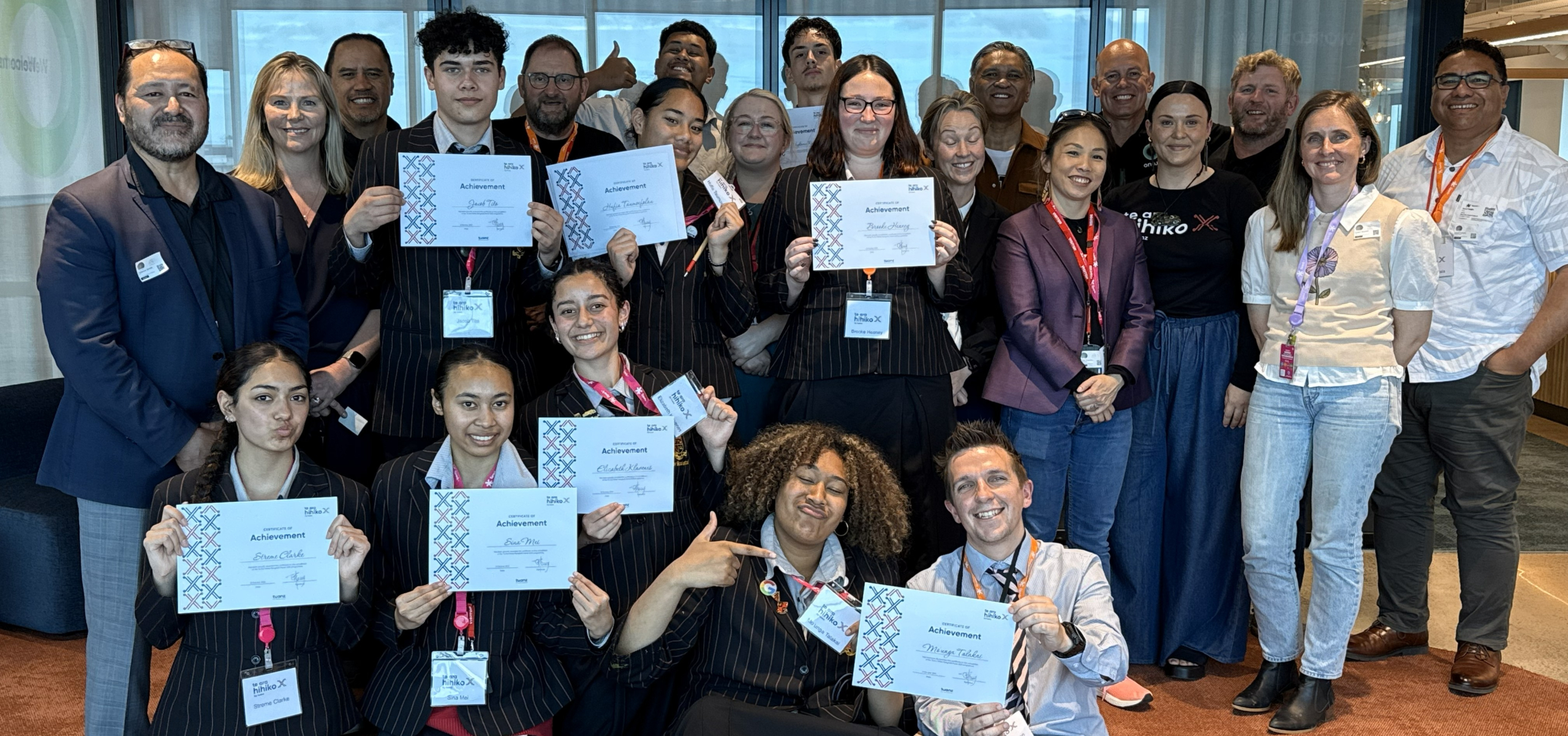
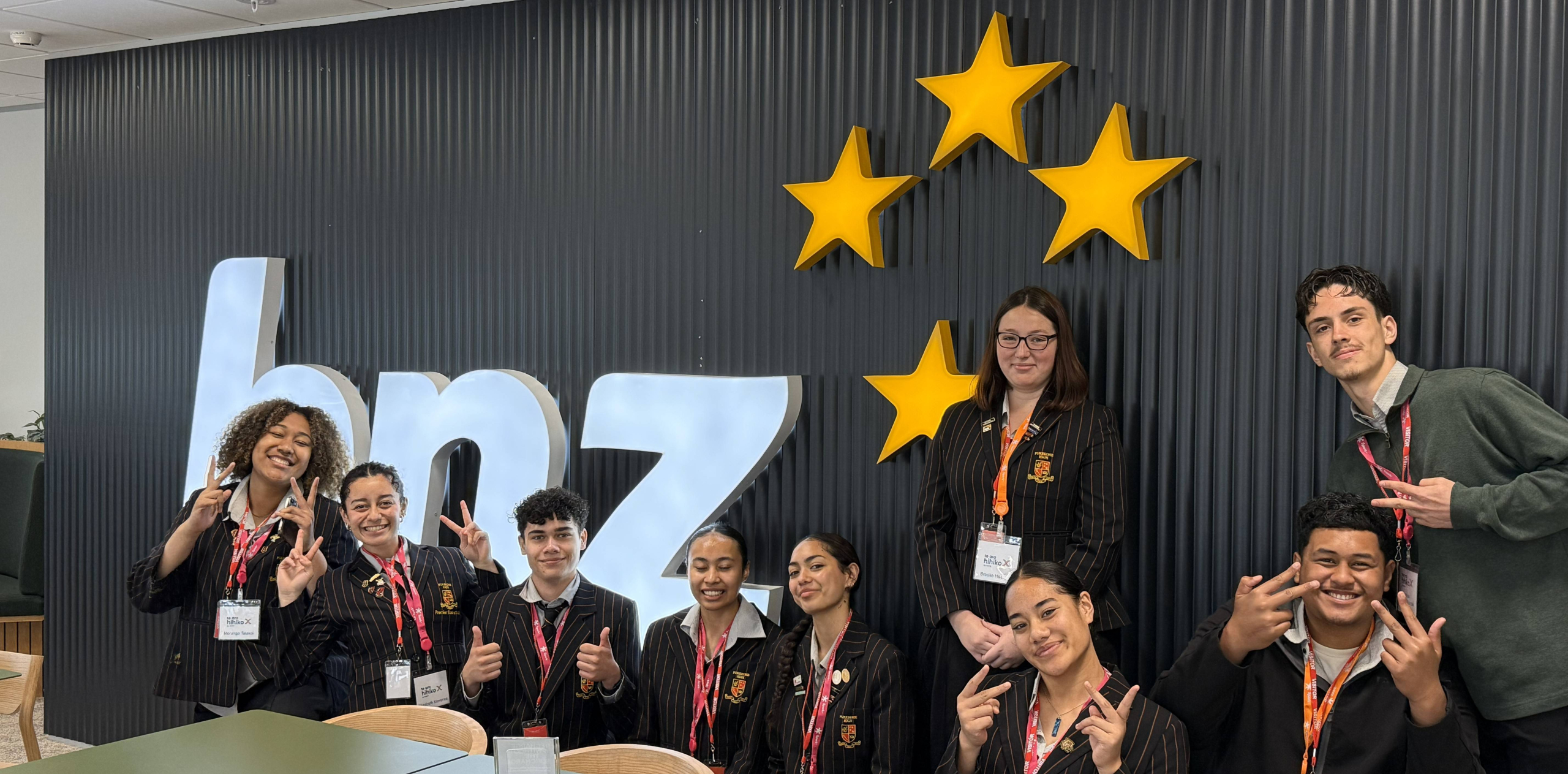
Our TUANZ community came together last month, to welcome and celebrate this rangatahi panel. A huge thank you to Bank of New Zealand Google NZ, Spark New Zealand and Worldline for hosting them throughout the day and demonstrating that our industry is, at its essence, diverse, creative and full of passion—a space where these young people can now genuinely see themselves.
This wasn’t a tick-box corporate exercise. This was and is a call to accountability, a call to action, and an invitation to us all to help reshape the future of our sector.
The insights from this panel are a powerful reminder of the immense value of creating safe spaces for young people to share their unfiltered truths. The path to attracting and empowering the next generation of talent isn’t paved with slicker recruitment campaigns or a more polished social media presence; it demands that we build a foundation of genuine understanding in their place.
These students proved that when given a platform, they won’t just provide feedback—they’ll offer the foresight needed to build a more inclusive and effective future of work. Their courage gave us a roadmap and so are we ready to truly listen?
Mā te kimi ka kite, mā te kite ka mōhio, mā te mōhio ka mārama!
Seek and discover, discover and know, know and become enlightened!
Click here if you would like to read the full report.
Our thanks to the Skills Foundation for supporting this mahi.