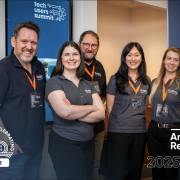
Message from the tech frontlines: Stop your blabbing, get to building

This is an opinion post from Craig Young, TUANZ CEO, published in The Sunday Star Times on 3 May 2026.

We all know that technology has the power to make Aotearoa New Zealand a better place. When we get it right, digital innovation boosts our local businesses, connects our communities, and makes our everyday lives easier and more productive. We’ve got some amazing foundations to be proud of—like the world-class communications networks connecting our homes and our mostly renewable energy grid. But right now, we are sitting at a crossroads.

For the past six years at TUANZ (Tech Users NZ), we’ve taken the pulse of the nation’s technology leaders. To pull together our latest report, Aotearoa’s Digital Priorities 2026, I personally sat down and interviewed dozens of the country’s top digital leaders, from major corporate CIOs to leading tech experts. The aim of this report is simple: to find out what is working, what is holding us back, and what we need to focus on to ensure no New Zealander misses out on the digital future.

What I heard from these leaders was an inspiring belief in what we can achieve, but it was mixed with a heavy dose of frustration. While our global peers are racing ahead, we are at risk of drifting. When I asked these experts about the government’s recent leadership in technology, the responses were pretty blunt—many called it a “talk fest” that looks good on paper but lacks real execution.

With an election year upon us, it is time to turn our digital ambitions into national action. Our tech leaders have laid out five very clear things they want the incoming Government to tackle to get us back into the top tier of digital nations:

Set firm rules to keep us safe online. Right now, our cyber security landscape is a bit too much “carrot” and not enough “stick”. With the rise of AI-driven scams and deepfakes, businesses and everyday Kiwis are exposed. Leaders are asking the government to step up as a shield, looking for mandatory, non-negotiable cyber security standards and a central system to vet international tech vendors so our data stays safe.

Teach digital skills and keep our local talent. We are losing too many of our bright young minds overseas. At the same time, AI is starting to automate the basic, entry-level office jobs that we traditionally used to train our junior staff. To fix this, the government needs to lead a massive push for digital literacy, embedding AI and tech skills into everything from our primary schools to adult learning programs. We have to build a workforce that is ready for tomorrow.

Modernise government tech and create a digital identity. Our leaders are highly frustrated by how fragmented the government’s own technology systems are. We need to aggressively consolidate these separate systems to make things run smoother. Most importantly, it is time to finally implement a secure, national digital identity framework. Having a safe, centralised digital ID will help prevent fraud and make doing business as well as accessing public services so much easier for everyone.

Create a long-term plan that survives elections. Technology doesn’t work on a three-year political cycle. If businesses are going to invest millions into new ideas, they need certainty. Our leaders are desperately calling for a cohesive, bipartisan national tech strategy, especially around artificial intelligence and data, that all sides of politics agree on and stick to.

Invest in the hard infrastructure so no one is left behind. Finally, we can’t have a digital revolution without the physical power to run it. The government needs to continue to invest in our core infrastructure, like ensuring our energy grids can actually power the massive global data centres being built here. This is about making sure that as technology advances, all our communities, both urban and rural, have the foundation they need to thrive.

The message from the tech frontlines is overwhelmingly positive about our potential, but clear about the need for action. We have the tools, the talent, and the infrastructure to be a world-leading digital economy. Now, we just need the national leadership to make it happen.

TUANZ launches 2026 Digital Priorities Report, warning of growing innovation gap for New Zealand

The Technology Users Association of New Zealand (TUANZ) today released its 2026 Digital Priorities Report, highlighting that New Zealand is at a pivotal technological crossroads, with strong digital foundations at risk of being undermined by slowing adoption and widening global competition.

(You can read the full report here)

The sixth annual report, delivered in partnership with One NZ includes insights from interviews with nearly 30 CIOs and CTOs from major enterprises or public sector organisations around Aotearoa.

Despite maintaining world-class fibre infrastructure and a reputation for sound digital governance, the report finds New Zealand’s overall technology adoption has plateaued, with digital leaders rating progress at just six out of ten. This stagnation comes as other nations accelerate their digital transformation efforts, creating a widening innovation gap.

Shift from AI experimentation to pragmatism

The 2026 Digital Priorities Report highlights a decisive shift in how organisations approach emerging technologies, particularly artificial intelligence (AI). Kiwi organisations are moving away from experimental use cases toward practical, high-volume applications embedded within existing platforms to deliver measurable returns on investment.

However, this evolution has introduced new challenges. “AI is no longer a future concept, it’s operational today in many large businesses around Aotearoa,” said Craig Young, Chief Executive Officer at TUANZ. “But while it acts as a powerful workforce multiplier, it is also intensifying the deep-tech talent shortage and reshaping how skills are developed.”

A key concern identified by tech leaders is the “ladder-pulling” effect, where AI automates entry-level tasks traditionally used to train junior staff, potentially disrupting the pipeline of future talent.

Rising risks: Shadow AI, costs, and cybersecurity

The report also points to a surge in “Shadow AI”, unsanctioned tools used within organisations, which has contributed to recent data breaches and heightened security

risks. The report warns that AI systems must now be treated as digital employees, governed by strict zero-trust security frameworks.

At the same time, organisations are under mounting economic pressure. Escalating software licensing and cloud costs are driving a shift from “cloud-first” to more strategic “cloud-smart” approaches, while fragmented and poor-quality data continues to hinder transformation efforts.

One NZ has again collaborated with TUANZ on the report and its Chief Information Officer, Adrian Albuquerque was one of the interviewees. He comments, “Digital transformation is a key enabler for many organisations – however in a cost constrained environment, many technology teams are grappling with how to drive value while also investing in new capabilities and tools. Strategic deployment of AI is imperative for New Zealand to continue maturing our digital economy.”

Global standing slips amid domestic challenges

New Zealand’s position in the global digital landscape is also under strain, with the country dropping to 23rd in the 2025 Network Readiness Index. While strengths remain in areas such as e-commerce regulation and inclusive governance, the nation lags in individual digital usage and faces persistent cybersecurity threats.

Nearly half of large businesses reported experiencing a cyberattack in the past year, with AI-driven social engineering tactics, including deepfakes and voice cloning, becoming increasingly sophisticated.

Albuquerque adds, “As New Zealand’s telco, our internal teams and customers are fighting what feels like a constant ‘whack a mole’ within our current cybersecurity reality. AI tools are both helpful and a hindrance with regards to scams and fraud, and it can feel like a never-ending battle to stay ahead of sophisticated bad actors. To better tackle this growing issue, organisations must adopt an identity-first, zero trust approach, and government must step up to meet this effort with consistent, mandatory, cybersecurity and data protection standards.”

Call for National Leadership and Digital Action

The report delivers a clear message: stronger national coordination and leadership are urgently needed. Key recommendations from TUANZ when drawing insights from tech leaders include:

● The introduction of mandatory, non-negotiable cybersecurity standards

● Establishment of a national digital clearing house to vet global technology vendors

● Government-led workforce development programmes to build AI capability

● Accelerated progress on a secure national digital identity framework

● Recognition of data platforms as critical national infrastructure

“New Zealand has the foundations to succeed, but without decisive action, we risk falling further behind,” said Young. “This is a moment for bold leadership, to stabilise businesses, invest in people, and build the governance frameworks needed for a high-productivity digital future.”

(You can read the full report here)

Making a Difference: Te Ara Hihiko wins Supreme Award at 2025 NZ Compare Awards

The Technology Users Association of New Zealand (TUANZ) is proud to announce that Te Ara Hihiko, its flagship equity-and-inclusion initiative, has been awarded the 2025 NZ Compare Supreme Award in the Making a Difference category. The award recognises organisations effecting real and lasting social impact, and this year the judges selected Te Ara Hihiko for its outstanding contribution to digital equity for Māori and Pasifika across Aotearoa.

“This award shines a spotlight on the critical importance of digital inclusion, diversity, and cultural equity in our industry,” says Megan Matthews, Chair and Programme Lead for Te Ara Hihiko.

“Building a sustainable tech sector in Aotearoa is not only about infrastructure or services,  it’s fundamentally about people, opportunity and social justice. When we create genuine pathways for Māori and Pasifika talent, we strengthen the entire industry and ensure our digital future truly represents all New Zealanders.”

“On behalf of the entire Te Ara Hihiko team, I would like to extend our heartfelt thanks to NZ Compare, the judges and everyone who has contributed to this mahi. This achievement belongs especially to our Māori and Pasifika participants and all our supporters who have championed this kaupapa from the beginning.”

Te Ara Hihiko, (pathway of energy and inspiration) is TUANZ’s programme to create equitable and culturally inclusive pathways into the digital sector for Māori and Pasifika. Through a series of in-person hui, collaboration with member organisations, cultural advisors, HR specialists and senior business leaders, Te Ara Hihiko addresses systemic barriers at every stage.

“Te Ara Hihiko’s win is more than just an award, it is an important milestone for equity in the New Zealand tech industry,” says Craig Young, CEO of TUANZ.

“We believe that opportunity should reflect Aotearoa’s diversity. This recognition will help amplify voices that are too often unheard, and encourage real systems change across the sector.”

With this recognition, TUANZ and Te Ara Hihiko are committed to deepening this kaupapa: expanding engagement, strengthening partnerships across the digital sector, and continuing to dismantle barriers so that Māori and Pasifika talent can thrive from rangatahi through to senior leadership roles.

“This award validates the hard work of so many people who have contributed to Te Ara Hihiko, but more importantly, it signals to the entire tech sector that equity and inclusion must be central to how we build our digital future,” says Craig.

“We’re energised to continue this mahi and grateful for the recognition that will help us reach even more rangatahi and organisations committed to meaningful change.”


For further information or interview requests, please contact:

Megan Matthews
Programme Lead, Te Ara Hihiko
Phone: 021 1121 523
Email: megan.matthews.nz@gmail.com


About Te Ara Hihiko
Te Ara Hihiko is TUANZ’s flagship programme dedicated to creating equitable pathways for Māori and Pasifika into New Zealand’s digital sector. Through collaboration, cultural inclusivity, and systems change, the initiative works to ensure the tech industry reflects the diversity of Aotearoa. The core aims of Te Ara Hihiko are to:

  • Raise awareness of the breadth of opportunities in New Zealand’s digital economy.
  • Provide clear, accessible pathways for rangatahi (young people) to enter digital roles.
  • Challenge and reform hiring and induction practices to be culturally appropriate, inclusive, and supportive of Māori and Pasifika staff.
  • Ensure fair and equitable opportunities for long-term growth and development once in the workforce.

Learn more: https://tuanz.org.nz/te-ara-hihiko/


About TUANZ
As the independent technology user’s association for Aotearoa, TUANZ aims to build on its history of leading and achieving positive change. Our goal is to mobilise users across all parts of society and the economy, ensuring they are aware of the opportunities and upcoming developments in technology. 
Learn more about TUANZ and explore our current work programme here: www.tuanz.org.nz

TUANZ Announces New Board Chair

The Technology Users Association of New Zealand (TUANZ) today announced the appointment of Paul Littlefair as Chair of the TUANZ Board.

“Paul brings deep technology leadership, proven governance experience and a strong commitment to developing the next generation of digital leaders,” says Craig Young, CEO, TUANZ.

“His track record across complex transformation, modern delivery and data-driven innovation will help guide TUANZ’s work to ensure all New Zealanders can thrive in a digitally connected Aotearoa.”

Paul Littlefair is the Chief Digital and Technology Officer at Kiwibank and has held senior technology roles across the financial services sector. He has broad expertise spanning cloud, agile software delivery, devops, data, infrastructure and enterprise architecture. He was awarded New Zealand CIO of the year in 2019. Paul was first appointed to the TUANZ Board in 2021. Originally from the UK, he migrated to New Zealand in 1998 and now lives in Wellington.

“TUANZ plays a critical role advocating for users, lifting digital capability, and building trust and safety online. I’m especially passionate about growing future leaders. Programmes like TUANZ’s FLINT and NextGen Leaders create powerful pathways to develop the skills and confidence New Zealand needs to compete globally,” says Paul Littlefair, Chair, TUANZ.

“As Chair, my focus will be on practical impact: partnering across industry and government to improve access and inclusion, foster responsible and innovative use of generative AI, strengthen data privacy, and continue building the digital skills that communities and businesses need. For our members, that means TUANZ continues to be a powerful voice, driving real outcomes that matter, creating opportunities for connection, learning, and influence. If you’re passionate about shaping the future of technology in Aotearoa, this is the place to be.”

“I’d like to sincerely thank Tristan Ilich for his outstanding service. Tristan has been a member of the TUANZ Board since 2016 and an exceptional Chair for the past six years. Under his leadership, TUANZ has evolved from a telecommunications-focused user association into one with a broader technology remit, reflecting the changing needs of our sector. While Tristan is stepping down as Chair, I’m pleased that he will remain on the Board, and TUANZ will continue to benefit from his experience and leadership.”

The new Chair will work with the TUANZ Board and team to advance the association’s refreshed strategy, focused on five critical themes: access and inclusion, trust and safety, education, generative AI and data privacy

The new Chair will work with the TUANZ Board and team to advance the association’s refreshed strategy, focused on five critical themes: access and inclusion, trust and safety, education, generative AI and data privacy.


For further information or interview requests, please contact:

Craig Young
CEO, TUANZ
Phone: 021 488 188
Email: craig.young@tuanz.org.nz


About TUANZ
As the independent technology user’s association for Aotearoa, TUANZ aims to build on its history of leading and achieving positive change. Our goal is to mobilise users across all parts of society and the economy, ensuring they are aware of the opportunities and upcoming developments in technology. 

Learn more about TUANZ and explore our current work programme here: www.tuanz.org.nz 

TUANZ Annual Report & AGM

Following a vibrant Tech Users Summit 2025, we’re pleased to share key outcomes from our AGM, celebrate our Member Awards, and publish our Annual Report.


New TUANZ Board for 2025/26
Congratulations to our re-elected and newly elected board members. These dedicated volunteers generously contribute their time and knowledge to champion our members’ interests across a range of digital technology issues, while providing governance and oversight of our operations.

Your TUANZ Board for 2025/26:

  • Tristan Illich (re-elected)

  • Zoe Udy (re-elected)

  • Matthew Harrison (re-elected)

  • Sid Kumar (re-elected)

  • Jo Crawford (newly elected)

  • Andrew Cushen

  • Paul Littlefair

  • Caitlin Metz

  • Garth Spencer

  • Kari Jones

  • David Mathieson

  • Eden Robertson (Board intern)

Our vision remains clear: ensuring all individuals and businesses have unrestricted access to the technology and services they need to thrive, so no one is left behind in our nation’s digital transformation. 


TUANZ Annual Report 2024/2025

You can read the full Annual Report here.


TUANZ Member Awards 2025

Congratulations to this year’s winners:

  • Community Initiative of the Year: Rise by Talent

  • Technology Initiative of the Year: One NZ
    Spark NZ and FortySouth received High Distinction

  • Outstanding Future Leader: Alex Stewart

  • Outstanding Leader in the User Community: Lee Timutimu

  • Technology Journalist of the Year: Bill Bennett

  • Life Member: Pat O’Connell

  • Chair’s Award: Anthony Royal

Thank you to all our members, partners, speakers and volunteers who made the Tech Users Summit 2025 and our AGM a success. Your support fuels our mission and strengthens our voice on the issues that matter to technology users across Aotearoa.

TUANZ Releases Connecting Aotearoa 2025 Report: Pushing for 100% Digital Connectivity

The Technology Users Association of New Zealand (TUANZ) has today launched its Connecting Aotearoa 2025 report, following its recent Connecting Aotearoa Summit in Hamilton. The report distils the summit’s key findings and sets a bold agenda for closing New Zealand’s digital divide.

The report responds to the critical question: “Why can’t 100% of New Zealanders be connected?” and lays out both the challenges and opportunities for achieving true digital equity.

“Digital connectivity is now a fundamental requirement for full participation in our society. This report is a call to action, because one in five New Zealand households are still digitally excluded, and that is simply not acceptable,” says Craig Young, CEO of TUANZ.

The report highlights ongoing issues around rural connectivity, affordability, digital skills, and the need for resilient, future-focused infrastructure.

“We have made huge progress as a nation, but to close the remaining gaps, we need more targeted investment, strong partnerships, and a long-term vision. Connectivity must be recognised as an essential utility, just like electricity or water, so that no one is left behind.”

The report also points to the importance of community-driven solutions, digital literacy, and raising awareness about digital exclusion.

“What we heard at the summit is that collaboration between government, industry, and communities is key. The practical solutions are there, but we need the will and the resources to implement them. Together, we can make digital equity a reality for every New Zealander.”

“Let’s make this the decade where we deliver on the promise of universal digital connectivity. The time for talk is over; the time for action is now.”

The Connecting Aotearoa 2025 report’s key themes include:

  • Strengthening rural connectivity
    Bridging the digital divide and ensuring access for all, regardless of location.
  • Making internet affordable for everyone
    Examining the cost barriers to internet access and exploring solutions for greater affordability.
  • Advancing digital equity
    Promoting inclusivity and ensuring everyone has the opportunity to participate in the digital world.
  • Shaping the future of connectivity
    Exploring emerging technologies and innovative solutions for a connected Aotearoa.

Download the report and find out more: Connecting Aotearoa 2025

For further comment or interview, please contact Craig Young, CEO, TUANZ

Phone: 021 488 188 

Email: craig.young@tuanz.org.nz  


About TUANZ
As the independent technology user’s association for Aotearoa, TUANZ aims to build on its history of leading and achieving positive change. Our goal is to mobilise users across all parts of society and the economy, ensuring they are aware of the opportunities and upcoming developments in technology. 

Learn more about TUANZ and explore our current work programme here: www.tuanz.org.nz 

Shaping Aotearoa’s future together

The Tech Users Summit returns for 2025! Co-hosted by the Digital Health Association (DHA) and TUANZ, this flagship event brings together two influential networks with a shared goal: to advance digital technology as essential infrastructure for modern life.

This year’s theme, Digital as Core Infrastructure, recognises a pivotal moment for New Zealand. While roads, energy, and water have long been seen as the backbone of our society, digital systems are now just as essential. Broadband, connectivity, digital health platforms, and smart services are the new threads connecting our people, communities, and institutions. Together they help enable better decisions, faster responses, and stronger outcomes in every sector.

The 2025 summit explores the digital challenges and opportunities shaping our future, with a programme focused on topics that matter most:

  • Artificial Intelligence (AI): Delving into opportunities, risks, and ethics in both health and business.
  • Security & Safety: Addressing cybersecurity for data and enterprise, and safeguarding all New Zealanders online.
  • The Talent Gap: Strategies for building a diverse, future-ready digital workforce.

Expect inspiring keynote speakers, dynamic breakouts, and networking designed for genuine cross-sector collaboration. By joining forces, TUANZ and DHA are accelerating digital impact, creating a unique platform where digital tools meet real-world outcomes.

Now is the time to help shape a national vision for digital. Whether you’re a TUANZ or DHA member—or simply passionate about New Zealand’s digital future, your voice matters. Don’t miss this opportunity to connect, learn, and lead as we ensure technology empowers every person, business, and community.

Learn more and secure your place >> Tech Users Summit 2025

Why should digital be a core infrastructure for Aotearoa?

In today’s world, digital technology is more than just a tool, it’s the backbone of modern society. As New Zealand continues its rapid digital transformation, it’s clear that digital is not just an add-on, but an essential infrastructure, as critical as our roads, energy and water systems.

Digital infrastructure underpins how we work, connect, learn and access vital services. From telehealth appointments to secure online banking, cloud-based business systems that keep our economy running, digital technology is woven into the fabric of everyday life. When digital systems are robust, everyone benefits: businesses are more resilient, government services are more accessible, and communities can better respond to challenges and opportunities.

But treating digital as core infrastructure is also about ensuring equity. Reliable internet, digital skills, and access to technology shouldn’t be a privilege, they are basic requirements for full participation in modern society. By investing in digital infrastructure, New Zealand can close the digital divide, boost productivity, and empower innovation across every sector, from healthcare and education to business and government.

That’s why this year’s Tech Users Summit 2025 is themed “Digital as Core Infrastructure.” We’re bringing together leaders, innovators, and decision-makers from across Aotearoa to explore how digital infrastructure is reshaping our future and what we must do to ensure everyone can thrive in a connected world.

Join us on 10 September 2025 at the Grand Millennium Hotel, Auckland, to be part of this crucial conversation. Let’s unlock New Zealand’s digital future, together.

Learn more and register today.

Support Cyber Smart Week 2025

Our lives are increasingly digital, yet many of us don’t safeguard our online presence with the same diligence we apply to our physical world. For example, we consistently use seatbelts in cars and secure our homes and offices, but often neglect similar protection for our online bank, email and social media accounts.

We’re supporting this year’s Cyber Smart Week, running from 6-12 October and encourage all our members to join us, especially given that over half of all New Zealanders have experienced an online incident in the last six months!

Organised by the National Cyber Security Centre (NCSC), this year’s campaign will  continue to emphasise online security, encouraging all New Zealanders, both at home and at work, to adopt simple protective measures.

Sign your organisation up to become a supporter of Cyber Smart Week 2025 and, closer to the time, you’ll receive free material and resources you can share with your employees, customers and communities. This will include ready-to-use materials such as posters, editorial content, a social media pack, challenges, a quiz and more. 

Register here to become a supporter of Cyber Smart Week 2025

Why can’t 100% of New Zealanders be connected?

This was the bold question driving our Connecting Aotearoa Summit 2025 at Claudelands Events Centre in Hamilton. With nearly 200 attendees and a full house, it was clear this conversation is vital for Aotearoa’s digital future. With industry leaders, innovators and community advocates in the room, our summit challenged us all to imagine a truly inclusive digital future.


Inspiration & international insights

Our day began with international lessons from Petra Claessen (BTG President) and Carol Bennett (CEO, ACCAN). They shared global perspectives, reminding us that digital equity is a shared challenge and a shared opportunity.

Emerging Technologies Panel
Facilitated by Adam Beck, with Simone Cuthbert-Scott (One NZ), Sebastian Faxer (Ericsson NZ), and Chris Roberts (Amuri Net), this panel explored how next-gen networks, satellite connectivity, and innovative rural solutions can help achieve 100% connectivity. Key highlights included:

  • Next-generation networks:
    The panel explored how upgrading to next-gen networks is critical to reaching underserved areas and ensuring high-speed, reliable connectivity for all New Zealanders.
  • Satellite connectivity:
    Discussion highlighted the increasing role of satellite technologies, including Low Earth Orbit (LEO) in bridging gaps where terrestrial infrastructure is not viable.
  • Rural innovation:
    Innovative rural solutions were showcased, including locally-driven initiatives and partnerships that tailor connectivity to the unique needs of different regions.
  • Building resilient infrastructure:
    Ensuring that networks are robust, flexible and disaster-ready was a central theme. The panel stressed the importance of designing infrastructure that can withstand natural disasters and other disruptions, providing continuity of service.
  • Advancing digital equity:
    The discussion emphasised that access to technology should not depend on geography, everyone should benefit from digital advances.
  • Fostering strong partnerships:
    The panel agreed that collaboration between telecommunications companies, technology innovators, and local communities is essential for sustainable and scalable progress toward universal connectivity.
  • Community engagement:
    Panellists acknowledged the value of working closely with communities to co-design solutions that address real-world barriers and ensure lasting impact.
  • Vision for 100% connectivity:
    Ultimately, the panel called for bold, collective action to close the digital divide, leveraging both established and emerging technologies to achieve the goal of 100% connectivity across Aotearoa.

What are we doing to help close digital inequity?

Our panel discussion, facilitated by Victoria MacLennan (DECA) with Pete Bains (BAINZ), Rose Jamieson (InternetNZ) and Lee Timutimu (Our Net) brought real talk and practical ideas:

  • “Can we solve digital exclusion for Aotearoa?” Rose Jamieson reminded us to focus on opportunity and impact.
  • Lee Timutimu, who is passionate about solving the digital divide, shared how social impact ISPs are challenging the status quo, with pilot programmes set to launch in Northland and Rotorua.
  • Collaboration is key: share initiatives, avoid silos, and amplify impact.
  • Security, digital literacy, and access to basic services are essential for meaningful inclusion.
  • Could you run your life without tech? Look out for No Tech Day, it’s a new national campaign to raise awareness and action on digital exclusion.

Digital access as a right

In his keynote address, Mark Aue, CEO of Chorus, delivered a powerful message:

  • NZ’s fibre network is world-class, but 1 in 5 households remain digitally excluded, that’s 400,000 homes.
  • To close the gap, we need long-term vision, bold investment and genuine collaboration.
  • “It’s not about making money or losing it, we all have a role to play in delivering digital equity and ensuring every New Zealander has the opportunity to connect and thrive.”
  • New initiatives like the community co-funded fibre build and proof-of-concept trials for low-income households are steps forward—but scaling impact requires all of us.

Key themes 

  • Rural Connectivity:
    Bridging the digital divide and ensuring access for all, no matter where you live.
    “Connectivity underpins the vitality of our rural communities. We must ensure no one is left behind,” says Hon Mark Patterson, Minister for Rural Communities.
    “Connectivity is absolutely critical to rural communities, not just for business, but for health, safety and social connection.” 
  • Affordability:
    Tackling the cost barriers to access.
    “Rural households pay on average 29% more than urban households for their broadband connection,” says Rachael Coyle (Commerce Commission).
  • Digital Equity:
    Promoting inclusivity and participation for everyone.
    “There are 130,000 households in New Zealand without an internet connection. Our mission is to improve the lives of all New Zealanders affected by digital poverty,” says Lee Timutimu (Our Net).
  • Future Connectivity:
    Exploring emerging tech and innovative solutions for a connected Aotearoa.
    “Digital connectivity must be a right, not a luxury. It’s the backbone of our future competitiveness, productivity, and prosperity,” says Mark Aue (Chorus)

Innovation spotlight:

  • Chorus: Expanded its community co-funded fibre build programme, offering up to $3,500 per premise for eligible communities.
  • Our Net: Launched as a digital equity ISP, delivering affordable, community-powered internet.
  • 3G Shutdown: Paul Brislen (TCF) provided practical advice and tools for consumers and businesses ahead of legacy network closures.

What’s next?

Thank you to everyone who made the Connecting Aotearoa Summit 2025 possible. Special thanks to all our speakers and our premier partner Chorus and gold partner, InternetNZ. We’ll be sharing more highlights and insights in the coming weeks, including our special report: Connecting Aotearoa 2025. Visit tuanz.org.nz to learn more and join our mission to connect every New Zealander.